A practical guide to supporting healing, reducing unnecessary swelling and feeling stronger during recovery
Recovery at a glance: Prioritize protein, colorful produce, healthy fats, useful carbohydrates and regular fluids. Limit alcohol, nicotine, excessive sodium and unapproved supplements.
Introduction
Plastic surgery may last only a few hours, but healing continues for weeks and, beneath the surface, often for months. During that time, your body is doing demanding work: controlling inflammation, repairing blood vessels, producing collagen, rebuilding skin and soft tissue, supporting the immune system and restoring energy. The food and drinks you choose cannot replace skilled surgery or careful aftercare, but they can give your body the raw materials it needs to recover efficiently.
A good recovery diet is not a restrictive “detox,” an expensive collection of supplements or a list of miracle foods. It is a practical eating pattern built around protein, colorful produce, healthy fats, minimally processed carbohydrates and adequate fluids. It should also be realistic. In the first days after an operation, nausea, fatigue, constipation, discomfort and a reduced appetite may make large meals unappealing. The goal is therefore not perfection. The goal is to make nourishing choices easy, gentle and consistent.
Whether you are preparing for rhinoplasty, liposuction, a tummy tuck, breast surgery, facial rejuvenation or another cosmetic procedure, this guide explains what to eat, what to drink, what to limit and how to plan ahead so that recovery feels more manageable.
Why Your Body Needs More Support After Surgery
Surgery creates a carefully controlled injury. Your body immediately responds by sending immune cells and nutrients to the treated area. Swelling and bruising are part of this early response, but excessive inflammation, poor circulation or inadequate nutrition may make recovery more uncomfortable.
During the next stage, the body begins rebuilding. New collagen forms, small blood vessels develop and the incision gradually gains strength. These processes require energy and amino acids from protein, along with vitamins and minerals that help the body use those building blocks. Later, collagen fibers reorganize and mature. You may look and feel much better after a few weeks, while internal remodeling continues for considerably longer.
This is why extreme calorie restriction is rarely a sensible recovery strategy. Your activity level may be lower, but your body is not inactive. It is investing energy in healing. The best approach is to choose nutrient-dense foods in portions that feel comfortable and to follow any procedure-specific instructions from your surgeon.

Protein: The Foundation of Tissue Repair
Protein deserves priority after plastic surgery because it supplies amino acids used to make collagen, repair incisions, maintain muscle and support immune function. When appetite is low, patients sometimes eat mostly crackers, toast or plain rice. These foods may settle the stomach, but relying on them for too long can leave meals short on the nutrients recovery requires.
Try to include a protein source every time you eat. Good choices include eggs, chicken, turkey, lean beef, fish, Greek yogurt, cottage cheese, milk, tofu, tempeh, lentils, beans and quinoa. Soft options can be especially helpful during the first few days. Scrambled eggs, yogurt, blended lentil soup, tender fish and smoothies are often easier to tolerate than a large plate of meat.
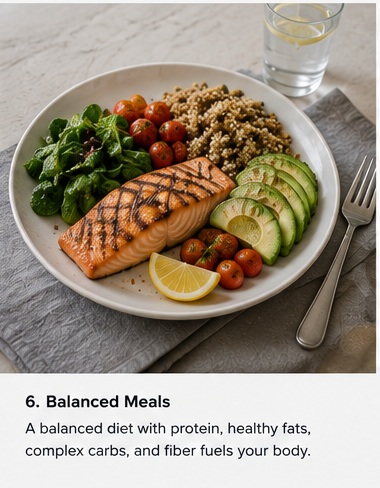
A simple strategy is to build meals in this order: choose the protein first, add a fruit or vegetable, then add a satisfying source of carbohydrates and healthy fat. This creates a more balanced plate without counting every gram. If your surgeon or dietitian has given you a specific protein target, follow that personalized advice.

Vitamins, Minerals and Colorful Foods
No single vitamin can guarantee faster healing, but several nutrients are involved in normal tissue repair. Vitamin C supports collagen production and is found in citrus fruit, berries, kiwi, bell peppers, tomatoes and broccoli. Vitamin A supports skin and immune function and is present in sweet potatoes, carrots, pumpkin, eggs and dark leafy greens. Zinc contributes to wound healing and immunity; useful food sources include meat, shellfish, dairy products, beans, lentils, nuts and seeds.
Iron helps red blood cells carry oxygen to healing tissue. Lean meat, lentils, beans, spinach and fortified grains can contribute iron, while vitamin C-rich foods improve the absorption of plant-based iron. Magnesium supports normal muscle and nerve function and can be found in nuts, seeds, whole grains, avocados and leafy vegetables.
The easiest way to cover a broad range of micronutrients is variety. Aim for several colors across the day rather than relying on one fashionable “superfood.” Berries at breakfast, leafy greens at lunch, orange vegetables at dinner and fruit as a snack can provide a wide mix of nutrients and antioxidants.

Healthy Fats and Smart Carbohydrates
Healthy fats help build cell membranes, support hormone production and improve the absorption of fat-soluble vitamins. Olive oil, avocado, walnuts, almonds, chia seeds and fatty fish are practical choices. Omega-3 fats from salmon, sardines, walnuts and flaxseed may fit well within an overall anti-inflammatory eating pattern.
Carbohydrates are also useful during recovery because they provide accessible energy. The goal is not to avoid them but to choose better sources most of the time. Oats, brown rice, quinoa, whole-grain bread, beans, fruit and vegetables provide energy along with fiber and micronutrients. Refined sweets and sugary drinks, by comparison, provide calories with little nutritional value and can displace more useful foods.
If nausea is present, bland carbohydrates may be appropriate temporarily. Toast, rice, bananas and crackers can be useful stepping stones until you are ready for more complete meals.
Hydration: Simple, Essential and Often Forgotten
Fluids support circulation, digestion, kidney function and the transport of nutrients. Dehydration can worsen fatigue, headaches and constipation, particularly when pain medication and reduced movement are already affecting the digestive system.
Keep water within reach and sip regularly rather than waiting until you feel very thirsty. Herbal tea, milk, soups, broths and smoothies also count toward fluid intake. Electrolyte drinks may be useful in hot weather, after vomiting or when specifically recommended, but many commercial versions contain substantial sugar or sodium. Choose them thoughtfully.
A practical sign of hydration is pale-yellow urine, although medications and supplements can change its color. Patients with kidney, heart or other conditions may have special fluid instructions and should follow their medical team’s advice.

Foods and Habits That Can Work Against Recovery
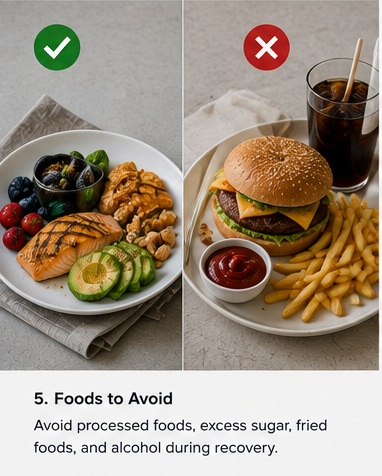
Recovery is not only about adding nutritious foods. It also involves limiting choices that may increase swelling, dehydration or bleeding risk.
High-sodium foods can contribute to fluid retention. Restaurant meals, processed meats, chips, instant noodles, canned sauces and many frozen meals are common sources. You do not need a completely salt-free diet unless your surgeon says so, but choosing fresh foods and tasting before adding salt can make a noticeable difference.
Alcohol can dehydrate the body, disrupt sleep, increase bruising or bleeding and interact dangerously with pain medicines or antibiotics. Avoid it for the period recommended by your surgeon. Smoking and nicotine are even more concerning because they reduce blood flow and oxygen delivery to healing tissue. This can significantly increase the risk of delayed healing and other complications.
Highly processed snacks, sweets and sugary drinks should be occasional rather than the foundation of your diet. Caffeine may be acceptable for some patients, but it should not replace water, and your surgeon may advise limiting it during the early recovery period.
Supplements deserve caution. Products that seem “natural” can still affect anesthesia, blood clotting and medications. Vitamin E, fish oil and several herbal products may be stopped before surgery in some practices. Never begin or restart supplements without checking your surgeon’s instructions.
What to Eat During the First Week
The first week is about comfort, consistency and convenience. Prepare food before surgery or arrange for help so that you are not relying on takeout when tired.
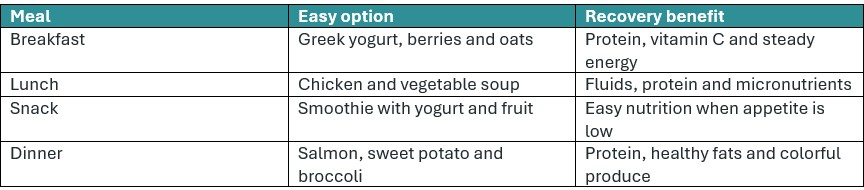
For breakfast, consider Greek yogurt with berries and oats, scrambled eggs with whole-grain toast, or a smoothie made with milk or yogurt, fruit and nut butter. Lunch could be chicken and vegetable soup, a tuna and avocado sandwich, or lentil soup with yogurt. Dinner might include baked salmon with sweet potato, tender chicken with rice and vegetables, or tofu with quinoa and steamed greens.
Small snacks can close nutritional gaps: cottage cheese with fruit, hummus with soft vegetables, a boiled egg, a handful of unsalted nuts or a protein-rich smoothie. If nausea is an issue, eat small portions every few hours and avoid heavy, greasy meals. If constipation develops, gradually add fluids, fruit, vegetables and whole grains while following your medical team’s advice.
Adjusting Nutrition for Different Procedures
The fundamentals are similar across procedures, but a few practical details differ.
After rhinoplasty or facial surgery, chewing may feel tiring and swelling may reduce appetite. Choose soft, cool or room-temperature foods such as yogurt, eggs, soup, oatmeal, mashed vegetables and smoothies. Avoid very hot foods if your surgeon advises it.
After liposuction or body contouring, sodium control and hydration are particularly helpful because postoperative swelling can be significant. Regular protein intake also supports tissue repair while activity is temporarily reduced.
After a tummy tuck, abdominal tightness and medication-related constipation may make large meals uncomfortable. Smaller meals, gentle foods and adequate fluids are often easier. Avoid overeating in one sitting.
After breast surgery, patients may have limited arm movement for a period. Prepare easy-to-open foods and place frequently used items at waist level before the operation. A simple recovery environment can be just as valuable as a perfect meal plan.
A Realistic Recovery Timeline
During days one to three, prioritize fluids, gentle foods and protein in forms you can tolerate. Appetite may be low, so small meals are completely acceptable.
During weeks one and two, gradually increase variety. Continue protein at each meal, keep sodium moderate and include fruits and vegetables every day. Many patients feel better during this stage, but visible improvement does not mean internal healing is complete.
From weeks three to six, return to a sustainable balanced diet rather than celebrating progress with frequent alcohol or heavily processed food. Collagen production and tissue repair are still active.
Beyond six weeks, the healthiest strategy is to keep the habits that support both recovery and long-term results: adequate protein, mostly whole foods, consistent hydration, regular movement when cleared and stable weight.

Common Questions
Can pineapple eliminate swelling? Pineapple contains bromelain and can be part of a healthy diet, but it is not a treatment and will not replace compression garments, medication or postoperative instructions.
Do I need protein powder? Not necessarily. It can be convenient when appetite is low, but whole foods are also effective. Choose a product appropriate for you and check with your medical team if you have allergies, kidney disease or other health concerns.
Should I take vitamin C or zinc? Some patients may benefit from supplements, while others already meet their needs through food. High doses are not automatically better. Use only what your surgeon recommends.
Can I drink coffee? Many patients can eventually return to moderate coffee intake, but water should remain the priority. Follow procedure-specific guidance.
When can I drink alcohol again? There is no universal date. The answer depends on your operation, medicines, bruising and recovery. Wait until your surgeon clears it.
What if I cannot eat much? Focus on small, frequent, protein-rich foods and liquids. Contact your surgical team if you cannot keep fluids down, have persistent vomiting or are concerned about your intake.
Final Thoughts
Your surgeon creates the surgical change, but your daily choices help create the environment in which that change heals. Recovery nutrition does not need to be complicated. Start with protein, add colorful plant foods, choose healthy fats and useful carbohydrates, drink regularly and reduce alcohol, nicotine, excessive sodium and highly processed foods.
Plan before surgery, keep meals simple and treat nutrition as part of your aftercare rather than an optional extra. Most importantly, follow the instructions provided by your surgeon, because your procedure, medications and medical history determine what is safest for you.
For individualized guidance before or after a cosmetic procedure, schedule a consultation with Dr. Mohsen Fadaei and discuss the recovery plan that fits your treatment and health needs.
References:
- What to eat (and drink) while you heal: Nutrition’s role in plastic surgery recovery — American Society of Plastic Surgeons
- The role diet and nutrition play in recovery from plastic surgery — American Society of Plastic Surgeons
- How do diet and smoking affect plastic surgery recovery? — American Society of Plastic Surgeons
- Road to recovery: Patience in practice after plastic surgery — American Society of Plastic Surgeons
- A Patient’s guide to Eating well before and after surgery — Royal National Orthopaedic Hospital, NHS